News & Academies' activities
New Report Identifies Priorities for Climate Adaptation and Policy Action in the Eastern Mediterranean
 Read the full report
In response to these escalating challenges, the Cyprus Academy of Sciences, Letters and Arts has released a new report titled “The Eastern Mediterranean Marine Environment Under Climate Pressure: Risks, Impacts and Priorities for Action. The project, carried out in cooperation with EASAC and the Network of African Science Academies (NASAC), was supported by a competitive grant from the InterAcademy Partnership (IAP).
Edited by Prof. Costas N. Papanicolas (The Cyprus Academy of Sciences, Letters and Arts), Dr. Aristomenis Karageorgis (Hellenic Centre for Marine Research) and Prof. Michael Norton (EASAC), the report builds on the work of the Eastern Mediterranean and Middle East Climate Change Initiative (EMME-CCI), including the Marine Environment and Resources Task Force, and reflects the work of an International High-Level Expert Group. The document synthesizes current scientific understanding and identifies priorities for adaptation and policy action to protect biodiversity, ecosystem functioning, fisheries, aquaculture, coastal infrastructure, tourism, cultural heritage and socio-economic resilience across the region.
The evidence reviewed indicates that observed changes in the Eastern Mediterranean are accelerating and, in several respects, appear to be evolving at rates closer to higher-emission scenarios than previously anticipated. The region is warming at nearly twice the global average, while marine heatwaves have increased markedly in frequency, duration and intensity.
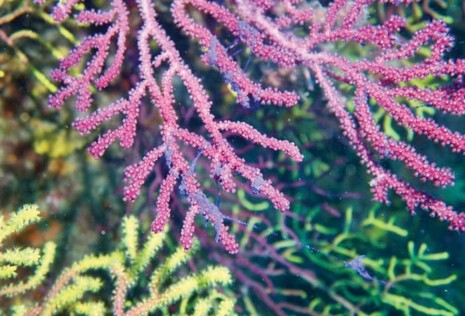
Marine ecosystems are undergoing significant transformations, with shifts in species distributions, habitat degradation and increases in harmful algal blooms and mass mortality events. These changes have profound socio-ecological implications. The expert group’s assessment found significant gaps in scientific understanding and observational capacity in many parts of the Eastern Mediterranean, particularly along southern coastlines, which remain under-observed. Long-term coordinated monitoring programmes are often fragmented or insufficiently resourced. This limits the region’s capacity to detect emerging trends, evaluate impacts and guide effective adaptation strategies.
The report identifies several priorities for action:
- Immediate priorities include strengthening marine observation systems, enhancing modelling capabilities, expanding early-warning systems for marine heatwaves, managing invasive species, and supporting research on vulnerable ecosystems and species.
- Medium-term priorities focus on incorporating adaptive planning approaches for sea-level rise and coastal infrastructure, strengthening and expanding Marine Protected Areas and improving their management, developing adaptation pathways for fisheries and aquaculture, and improving coordination and harmonization of monitoring protocols across countries.
- Long-term priorities emphasize strengthening regional scientific infrastructure and collaborative research networks, expanding transboundary cooperation mechanisms, and supporting integrated approaches linking climate adaptation, biodiversity protection and sustainable development.
The Eastern Mediterranean marine environment constitutes a shared and interconnected system whose challenges transcend national boundaries. Addressing the growing pressures of climate change requires sustained investment in scientific research, long-term observations and the strengthening of regional knowledge infrastructures capable of identifying emerging risks and informing adaptive responses. Effective responses will also require strengthened cooperation among transnational, regional and national authorities, working in partnership with research institutions and civil society. Such collaboration can help bridge scientific understanding and policy implementation and support coordinated actions capable of enhancing resilience across the region.
back to overviewFurther News & Academies' activities
All News
Member Academies