News & Academies' activities
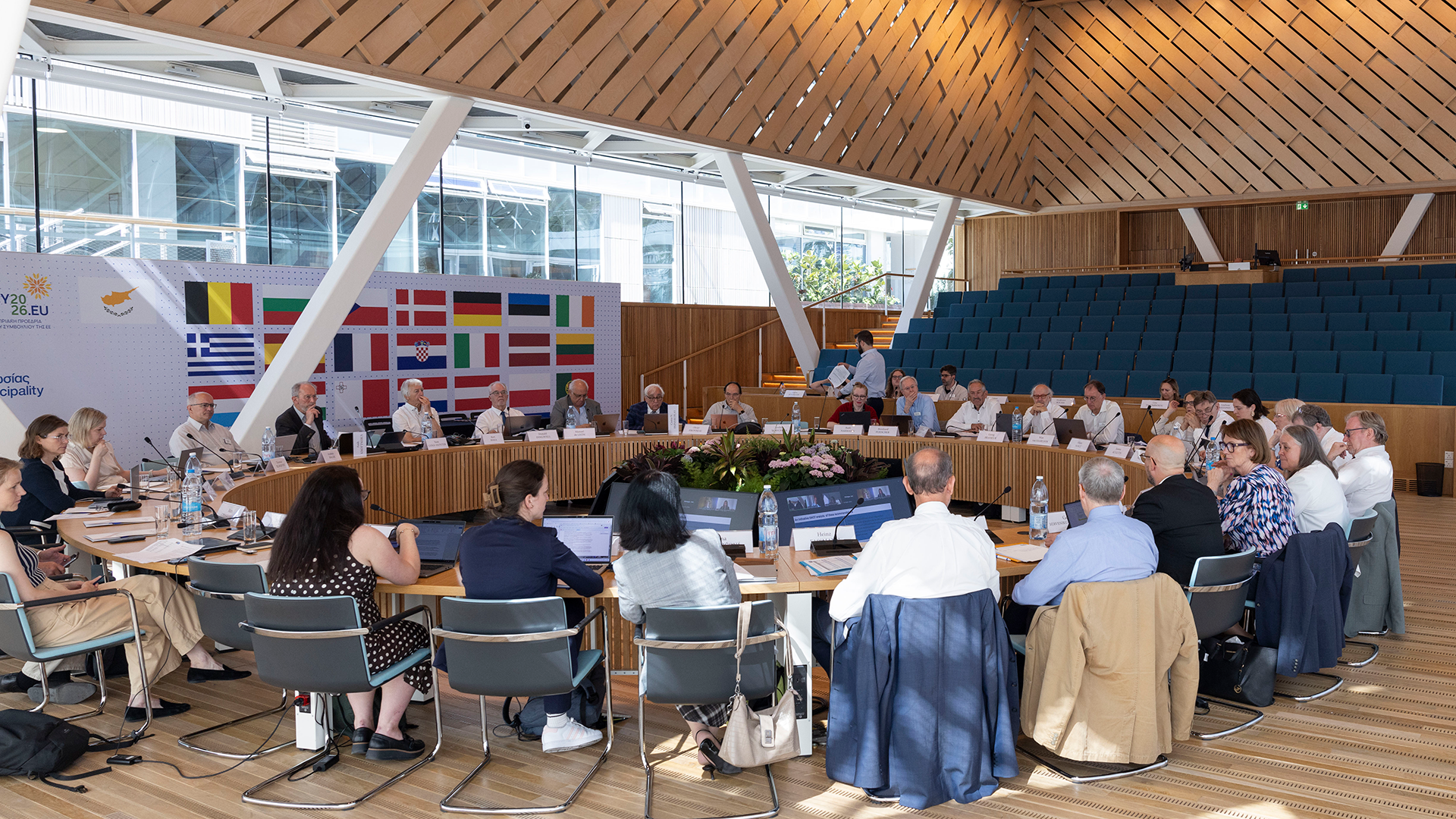
EASAC Celebrates 25 Years of Science for Policy Advice
Downloads
 Press Release (in English)
 Video: EASAC Celebrates 25 Years of Science for Policy Advice
Since its founding in 2001, the European Academies Science Advisory Council (EASAC) has been a trusted voice, harnessing the expertise of Europe’s national science academies to address pressing challenges - from climate change, environment protection and the energy transition to public health.
“As we celebrate 25 years of EASAC, the pressures on science - from misinformation, shrinking resources, and political polarisation to the complexity of global challenges - require the science community to stand together more than ever,” notes Lise Øvreås, President of EASAC. “The days when it was considered simple common sense to listen to experts are over. In the future, we will have to work even harder to earn trust and amplify the collective voice of European Academies and to ensure that evidence remains at the heart of policy. EASAC’s mission has always been to unite Europe’s brightest minds to serve the public good, and that mission is now more vital than ever,” she adds.
A quarter of a century of science-for-policy advice
EASAC’s 25th anniversary highlights the growing importance of robust, independent scientific policy advice. In an era characterised by disinformation and societal division, the organisation has, for a quarter of a century, demonstrated how cross-border and interdisciplinary collaboration can strengthen the influence of scientific findings on political decision-making processes.
Over the past 25 years, EASAC has published over 100 impactful reports and statements, advising the European Commission, Parliament, and Council on issues ranging from biodiversity loss, pandemic preparedness, and energy supply to the ethical implications of artificial intelligence. Its unique model - bringing together the national science academies of EU Member States, Norway, Switzerland, and the UK - ensures a diverse, multidisciplinary perspective that reflects the best of European science.
To mark the anniversary, EASAC will host a series of events in 2026 highlighting its achievements and the evolving landscape of science advice. For example, in September, EASAC and the Federation of European Academies of Medicine (FEAM) will launch a joint report on the use of artificial intelligence in healthcare.
“Science doesn’t take sides, but stands firmly for facts and innovation,” said Heinz Faßmann, President of the Austrian Academy of Sciences (ÖAW), which currently hosts the EASAC Secretariat in Vienna. “In an age marked by fear, misinformation and populist denial, upholding evidence requires courage. EASAC has spent 25 years demonstrating that courage and will continue to do so,” he remarked.
back to overviewFurther News & Academies' activities
All News
Member Academies